

WAEF Role Forces Non-Partisanship: Jonathan Explains Absence from Active Nigerian Politics.

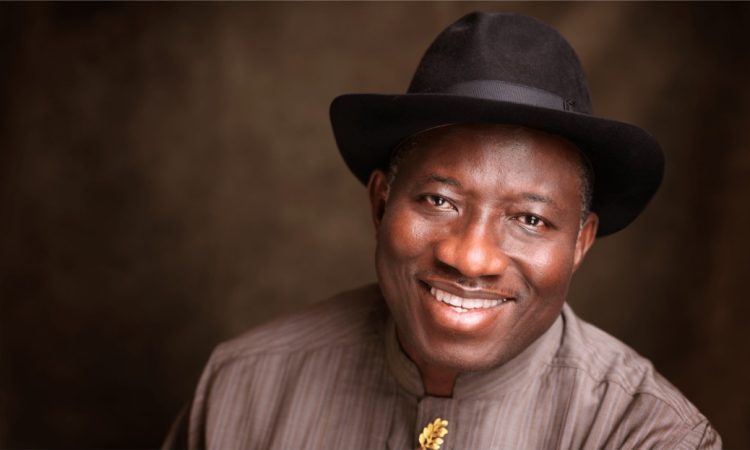
Former President Goodluck Jonathan stated that his continued absence from active and partisan politics is due to his membership in the West African Elders Forum (WAEF). Speaking in Abuja on Thursday at an event marking the 10th anniversary of the Goodluck Jonathan Foundation (GJF) and his 68th birthday, Jonathan explained to associates that WAEF membership carries a strict condition of non-partisanship. He described WAEF, which is composed of former heads of state, as a preventive diplomacy initiative that mediates and prevents crises during elections across the sub-region.
Jonathan further clarified the WAEF’s mandate: “The idea is, yes, we observe the elections, but we are not co-observers… We go there to make sure that if we notice anything negative emerging, we intervene and try to see what we can do so that those issues do not snowball into a full crisis.” He explicitly linked this role to his political inactivity, stating that WAEF membership requires being a former president of the sub-region and ECOWAS, with the clear condition that “you will no longer be an active politician.” This commitment, he acknowledged, is why he is “disappointing most of my political associates” who expect him to be active, clarifying that he would have to resign from WAEF first. Addressing the state of the nation, Jonathan lamented the “rascality” in politics, urging current politicians to conduct themselves with decorum and responsibility.
Jonathan observed that while professions like teaching require certification and training, many individuals assume leadership roles in politics without proper preparation. He strongly advocated for a change in political culture: “We must change the face of politics. We must see politics as a business of responsible individuals, not a business of rascals that they play in the motor park.” The former President also expressed deep sadness over the recent kidnapping of about 25 girls in Kebbi State, noting that the incident tragically recalled the Chibok abduction that occurred during his tenure. He offered condolences to the families of those who lost their lives, including a vice principal, and called for prayers for the safe rescue of the abductees and a permanent end to such tragedies.
Recounting the origins of the GJF after his 2015 electoral defeat, Jonathan disclosed that businessman Tony Elumelu initially suggested the idea. While the former President considered broad areas like education and poverty alleviation, advisors successfully urged him to concentrate on areas where he had established global credibility. They ultimately chose democracy and governance as the Foundation’s core focus, capitalizing on his internationally celebrated gesture of strengthening the electoral commission and conceding defeat before the conclusion of the 2015 elections. Despite his academic background in environmental protection and his Niger Delta origins, Jonathan opted to dedicate the Foundation’s efforts to democracy.
In her remarks, GJF Executive Director Ms. Ann Iyonu described the 10th-anniversary event as a time for reflection on a decade committed to inclusive democratic governance, peace building, and development across Africa. Iyonu affirmed the Foundation’s ongoing dedication to advancing democracy, equity, and progress, proudly declaring that after ten years, GJF has successfully “turned bold ideas into transformative action.”
Ms. Iyonu highlighted the GJF’s extensive role in strengthening democratic institutions through election mediation and observation missions, policy dialogues, and strategic advocacy across the continent. She noted that the Foundation’s annual Democracy Dialogue, inaugurated in 2021, is now a vital platform for engagement. The most recent dialogue, held in Accra, was themed “Why Democracies Die,” timely examining the factors undermining democratic resilience in Africa and globally.
Iyonu added that the Foundation’s peace-building efforts have successfully fostered peaceful political transitions, promoted inclusive governance, and advanced the security of African states and citizens while upholding the rule of law, human rights, and democratic principles. She further stated that GJF has contributed to preventing violent extremism (both online and offline), improved trust between state institutions and citizens, and expanded Africa’s global presence through international partnerships.


